A "made in Maine" story with a different ending
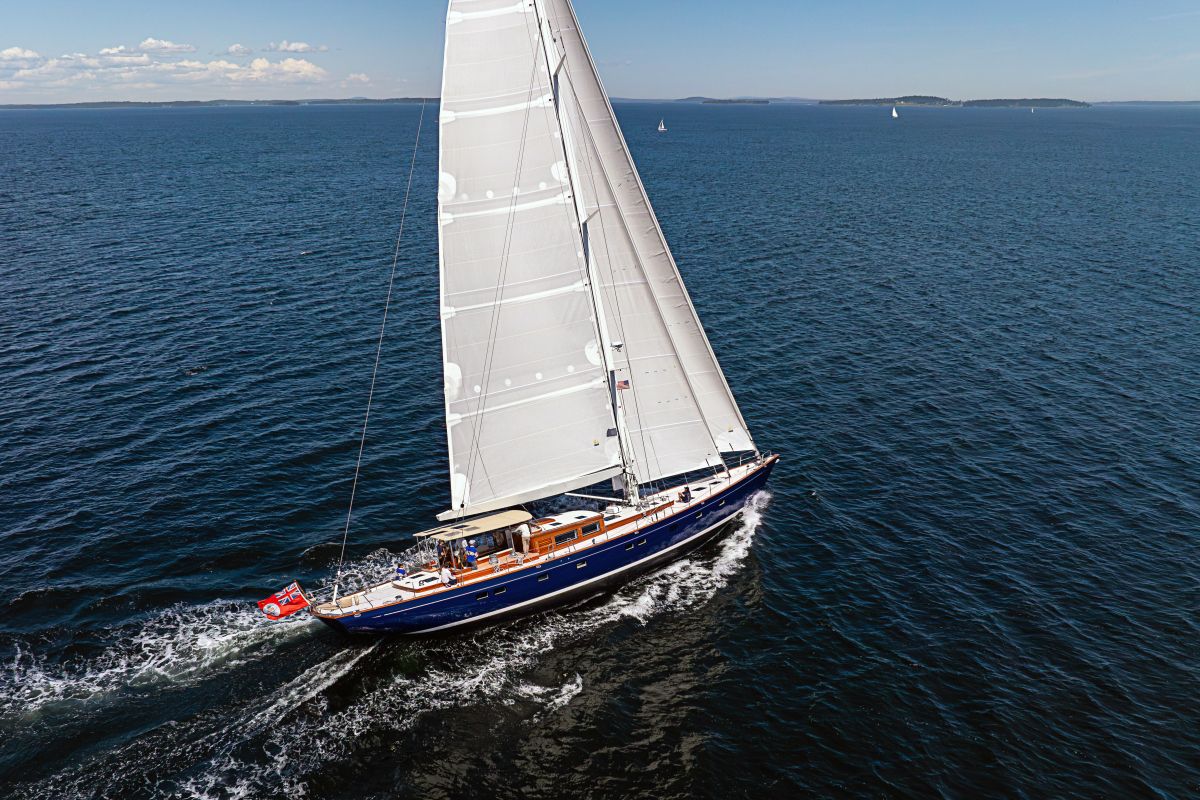
There is a common belief in the superyacht market that boats of this size are no longer built in the United States. Ouzel, a 95-foot (29-metre) sailing yacht launched this summer by Rockport Marine in Maine, was built to prove that wrong. "The world is finding out that this perception is wrong," says Peter Wilson, president of MCM, the construction management firm that represented the owner. "Ouzel proves you can build a world-class superyacht that stands shoulder to shoulder with European builds, right here in Rockport."
The project began in 2021 with a conversation between Wilson and the owner. From there came a team spread across the North Atlantic: Langan Design Partners, of Newport, took the naval architecture and exterior; Rockport Marine, the build; and the British studio Mark Whiteley Design, of Lymington, the interior. For years the group met remotely every week, with an owner involved in every decision. On the June sea trials he sailed Ouzel for the first time and came off, in Wilson's words, "elated".

Wood, carbon and fibreglass in the same hull
What makes Ouzel special starts with the construction. Rockport Marine is one of the world's leading experts in the wood-composite technique: layers of Douglas fir and western red cedar planks are laminated in multiple orientations, with carbon fibre incorporated where it strengthens the structure and an outer skin of e-glass. The method demands the traditional craft of working wood, but delivers a hull that does not corrode, needs little maintenance, insulates well and has an excellent strength-to-weight ratio, with critical areas reinforced with carbon and foam core.
"It's so satisfying for us to bring a project of this quality from raw materials to completion," says Sam Temple, president of Rockport Marine. "I'm pleased but not surprised that we are seeing increased acceptance of wood-composite building. The resulting yacht is low maintenance, doesn't corrode, has excellent strength-to-weight properties, and is beautiful."
Classic above the waterline, modern below
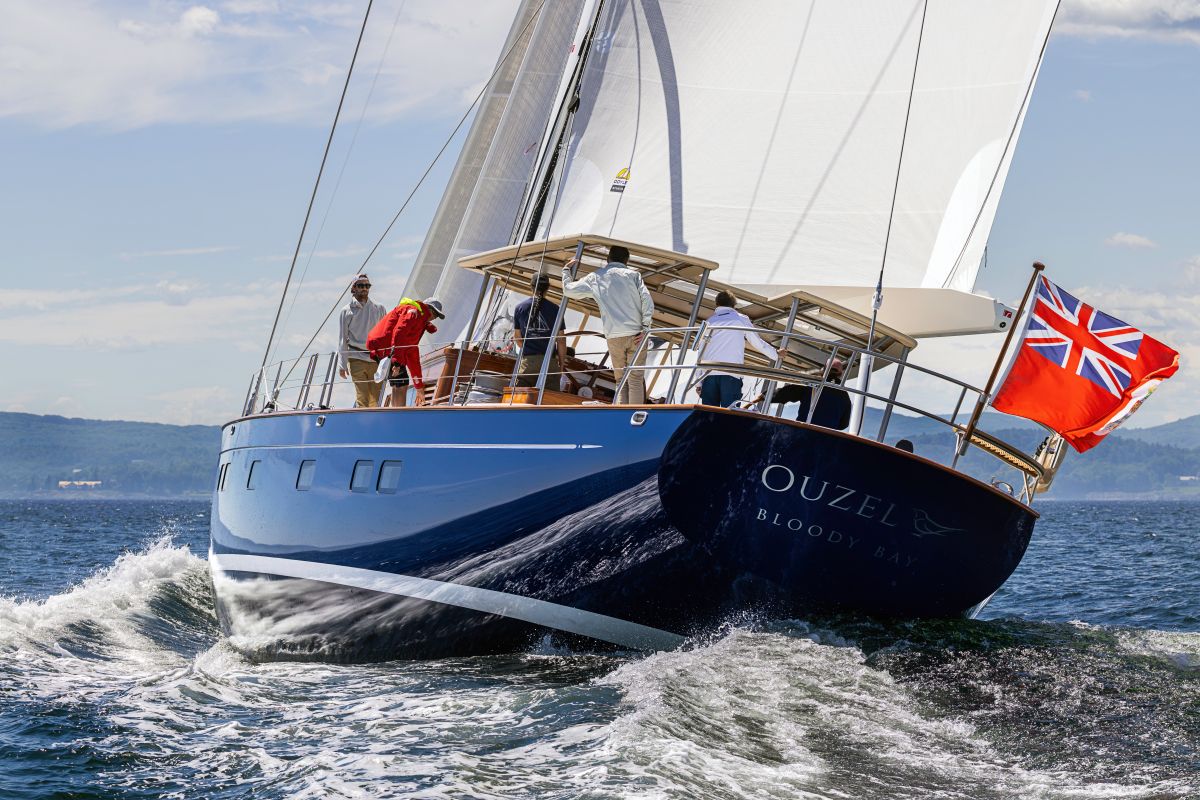
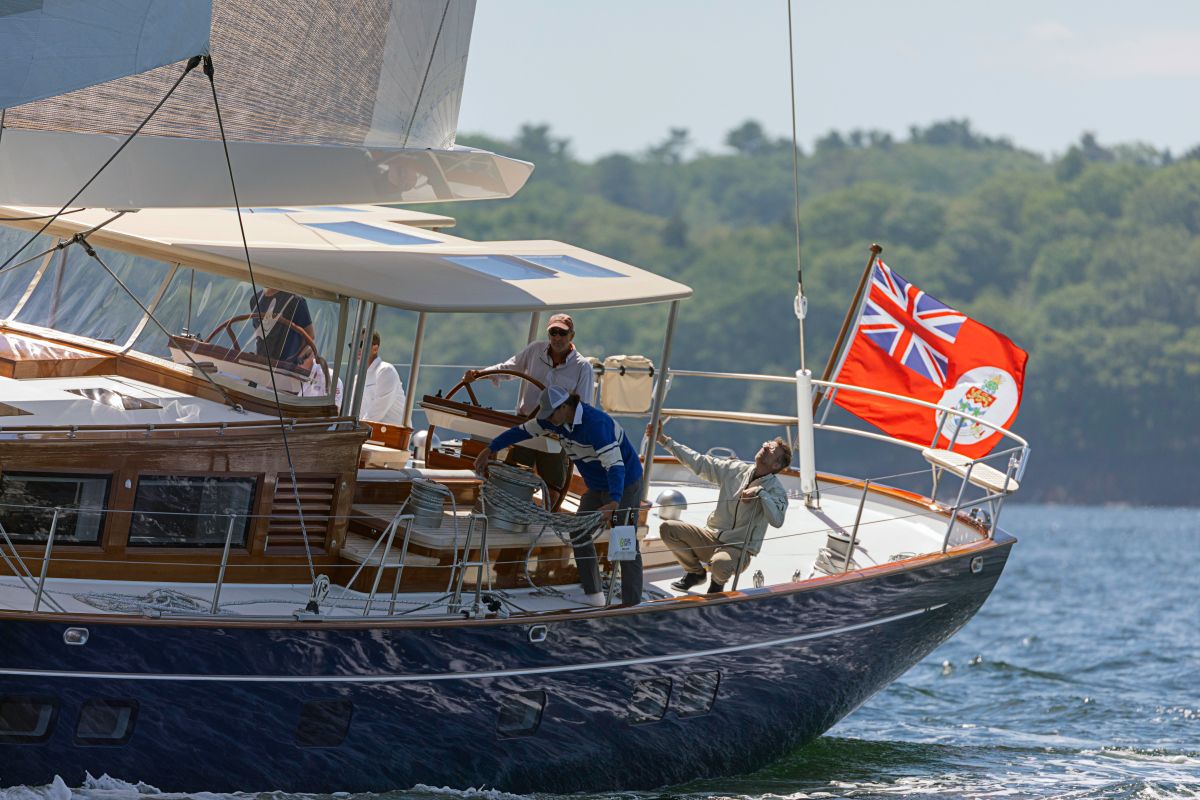
The brief to Langan Design Partners called for a yacht that would express Maine's boatbuilding heritage, with the classic lines of a pilothouse cutter. Hence the long bow overhang, the traditional counter stern, the sleek sheer, the teak-clad bulwarks and the discreet deckhouse.
Below the waterline it is another story. Ouzel has a fin keel topped with a hydrodynamic bulb, a deliberate owner choice to turbo-charge the yacht, which pushed the draft down to 3.66 metres. A deep spade rudder and a modern propeller complete the package. Mark Whiteley and Tom Degrémont, of Langan, worked closely together so that the transition between exterior and interior would be smooth, marrying the classic lines with the powerful cutter rig.
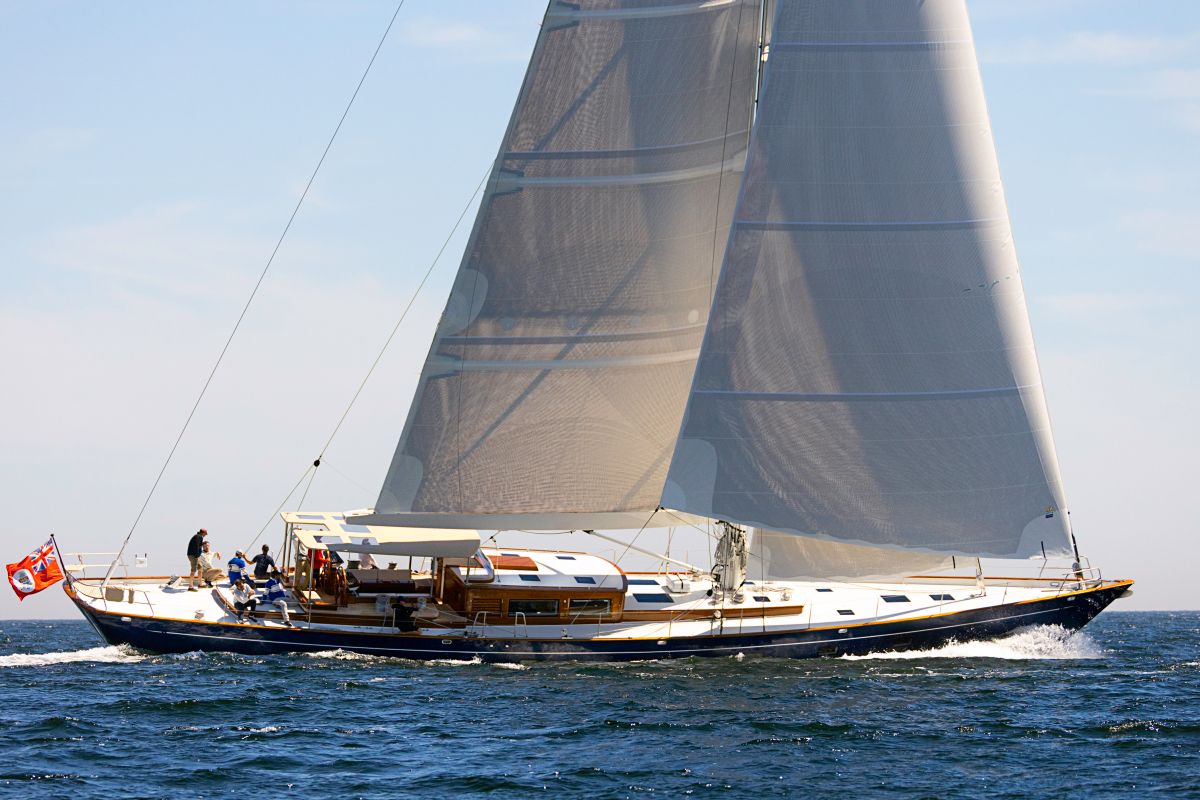
On the water: 10 knots upwind, 12 on a reach
On deck, Ouzel takes advantage of the latest in sail handling. The towering mast and Park Avenue boom are carbon fibre, by Hall Spars. Doyle Sails supplied a wardrobe of cruising laminate sails: a pin-head main, a high-cut Yankee, a staysail and a blade jib, chosen for short-handed crews, plus a Code Zero for open courses.
Trials on Penobscot Bay, in flat water and 10 to 15 knots of breeze, gave the verdict: light on the helm, Ouzel steamed upwind at 10 knots flying the staysail and Yankee and, cracking the sheets onto a fast reach, grazed 12 knots. "The impression of power, the speeds we reached, the feeling of control at the helm, the balance of the boat: everything felt exactly like I'd hoped it would feel," said Degrémont. "We hoisted the Code Zero a few times and powered across Penobscot Bay, surprised by how quickly we reached the other side."
A haven for crossing oceans
For the interior, Mark Whiteley combined a simple, functional layout with superyacht finish: hand-painted white upper panels over mahogany cabinetry and metal detailing he compares to jewellery. The low-profile deckhouse holds a luminous raised salon with deep sofa seating and a large navigation station to starboard. A companionway leads down to the lower salon, with a more classical arrangement of seating and dining space lit by hatches and hull lights. There are three guest cabins and one crew cabin.
"The style of the interior is modern classical, with proportions and detailing that reflect that," says Whiteley. "It feels relaxed but also gracious and elegant, and it links into the look of the outside as well, which is elegant and timeless."
Specifications
- Length overall: 29.04 m (95 ft 3 in)
- Waterline length: 21.80 m
- Maximum beam: 6.25 m
- Draft: 3.66 m
- Displacement: 75 t, with a 20,580 kg keel
- Sail area: 360 m² upwind, 560 m² downwind
- Tanks: 3,700 l fuel and 2,200 l fresh water
- Engine: Cummins QSL9, 410 hp, Hundested controllable-pitch propeller
- Mast and boom: Hall Spars, carbon; Doyle Sails; Harken winches; B&G electronics
- Construction: wood-composite (Douglas fir and western red cedar, carbon and e-glass), Rockport Marine, Maine (USA)
- Design: Langan Design Partners (naval architecture and exterior), Mark Whiteley Design (interior), MCM (project management)
By: Redação Mundo Mar
Photo: Foto: Tyler Fields / Rockport Marine