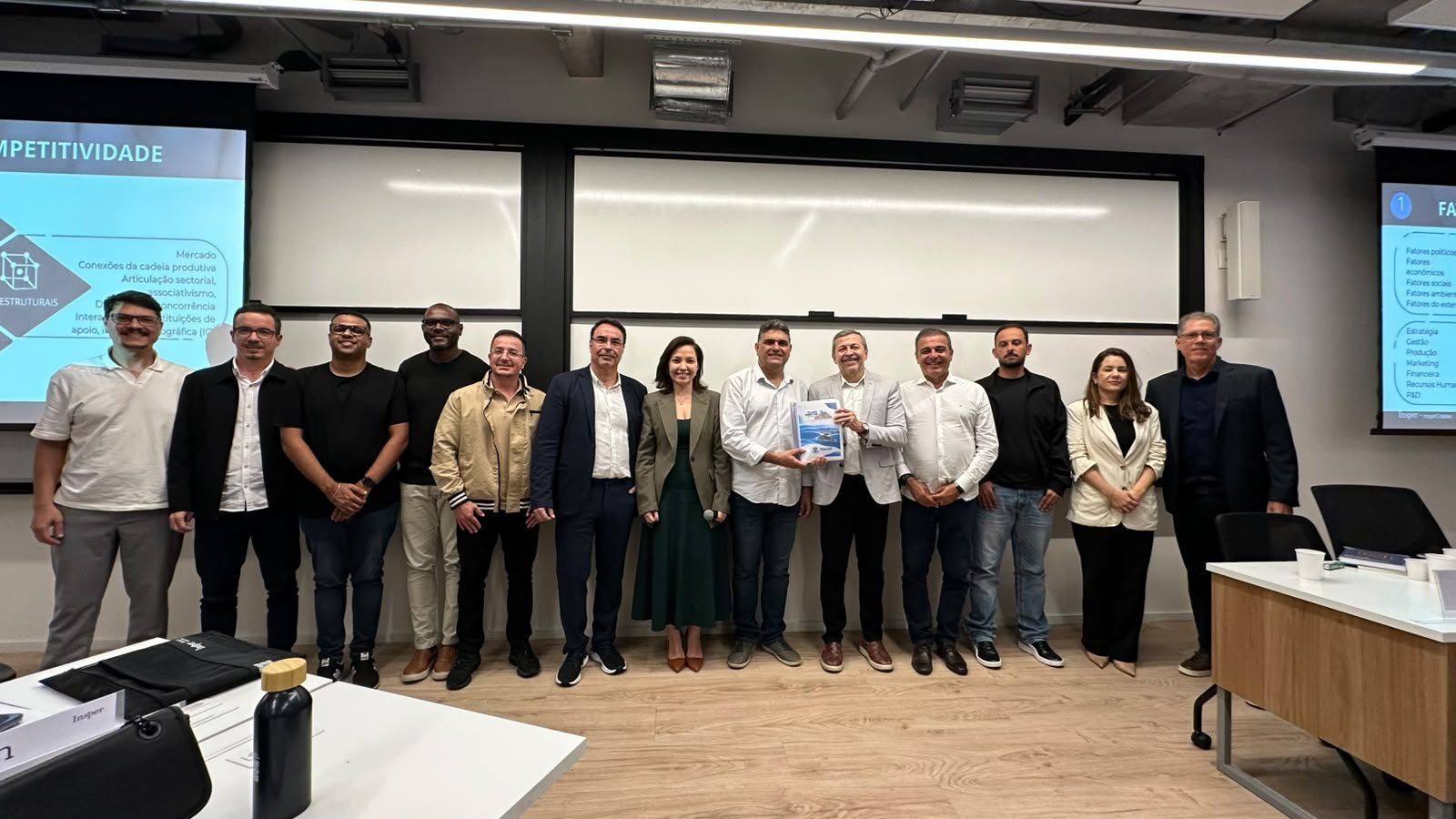
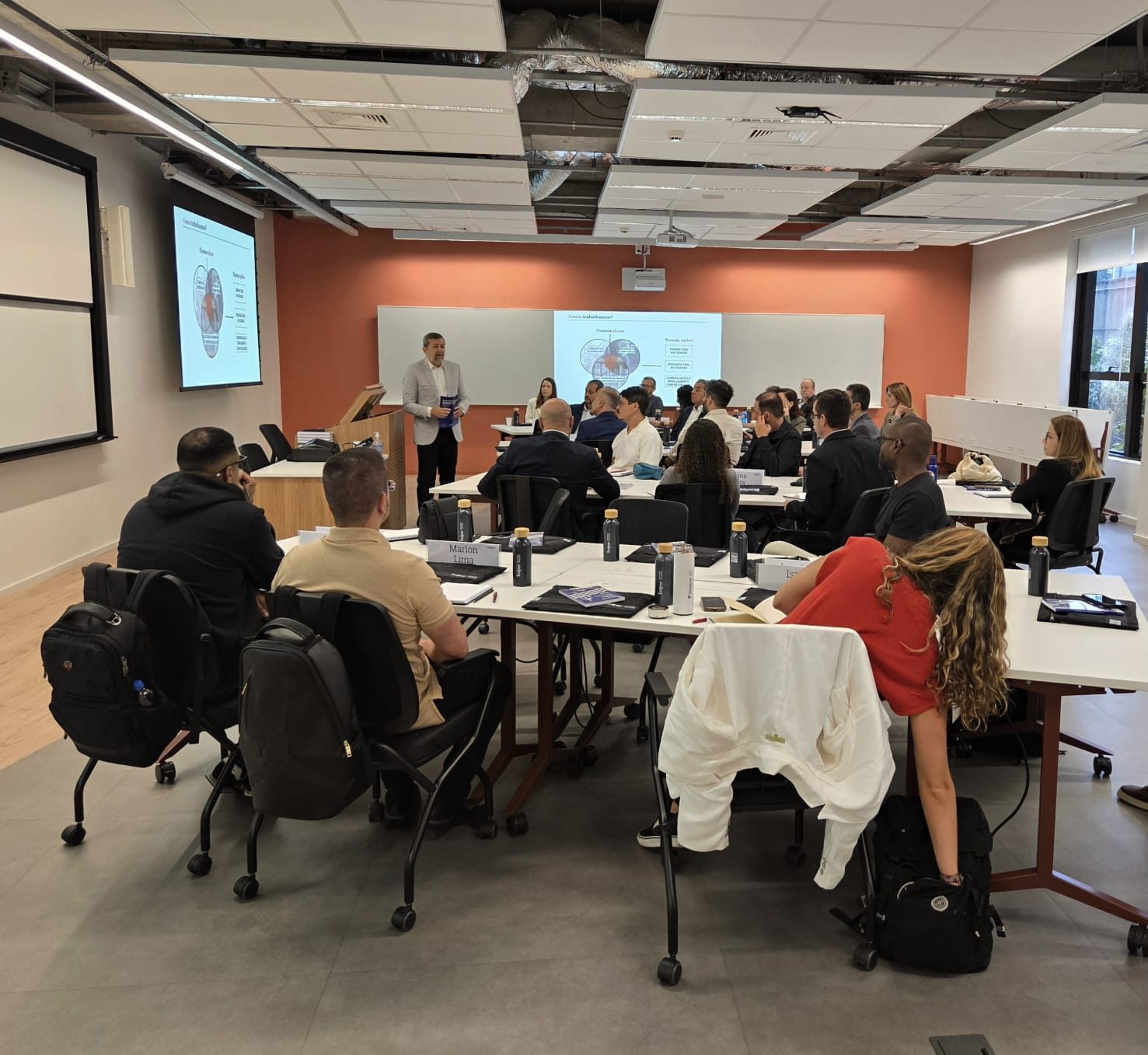
The fourth cohort of Insper's Blue Economy and Cities executive programme produced its first concrete result before it even ended. Managers from Macaé, in northern Rio de Janeiro state, handed Élcio Batista, coordinator of the Centre for City Studies' City + 2º Programme, the municipality's master plan already aligned with the blue economy. The course began on Thursday and runs until Saturday, in São Paulo.
It is hosted by the Centre for City Studies, Insper's Arq.Futuro Laboratory, in Vila Olímpia. The centre grew out of a partnership signed in 2019 between the school and Arq.Futuro, took its present shape in May 2024 and is now one of the four units that hold the institution's research groups. The programme runs to 24 hours of in-person teaching, according to the syllabus published by Insper.
Who is in the room
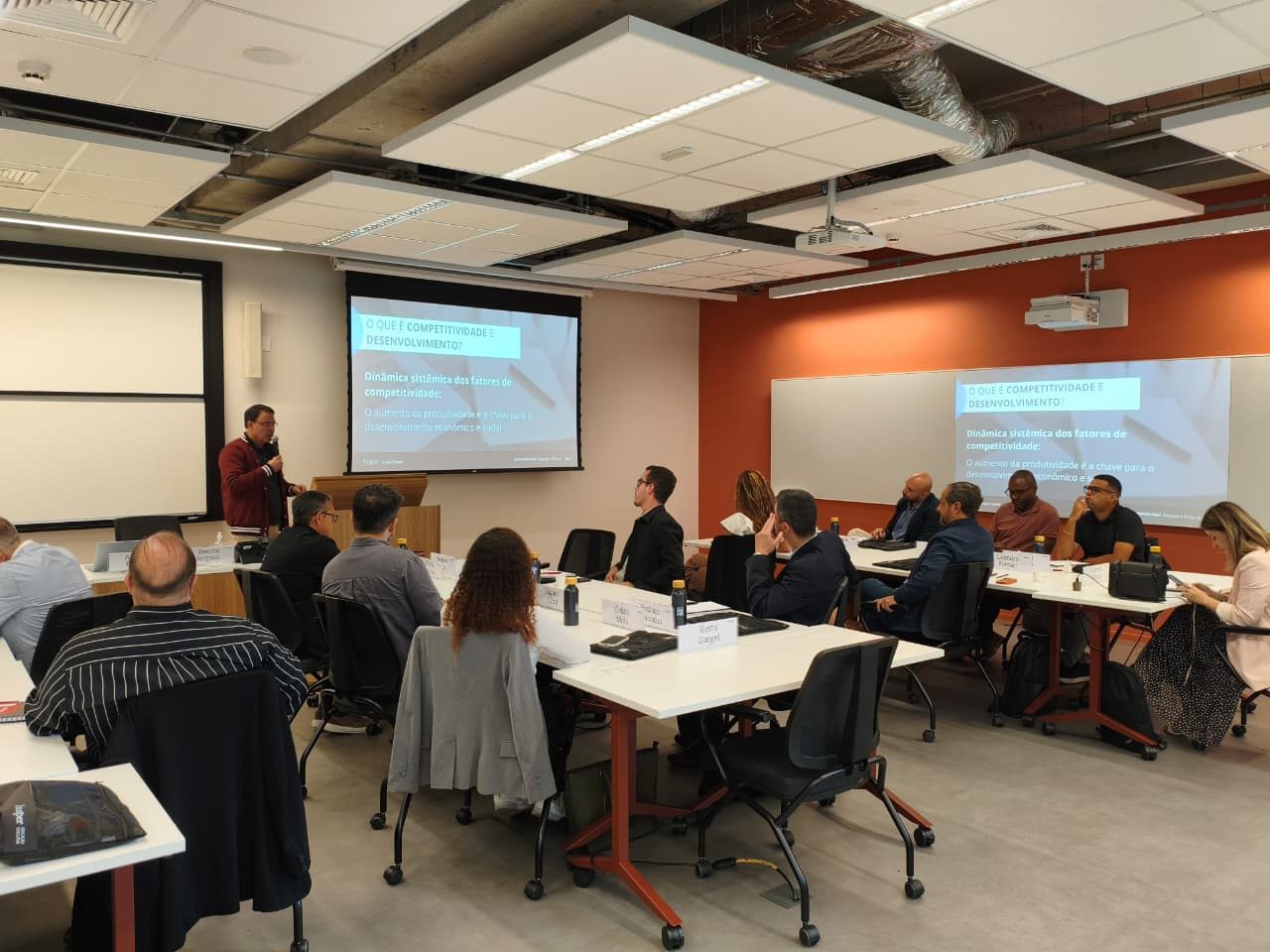
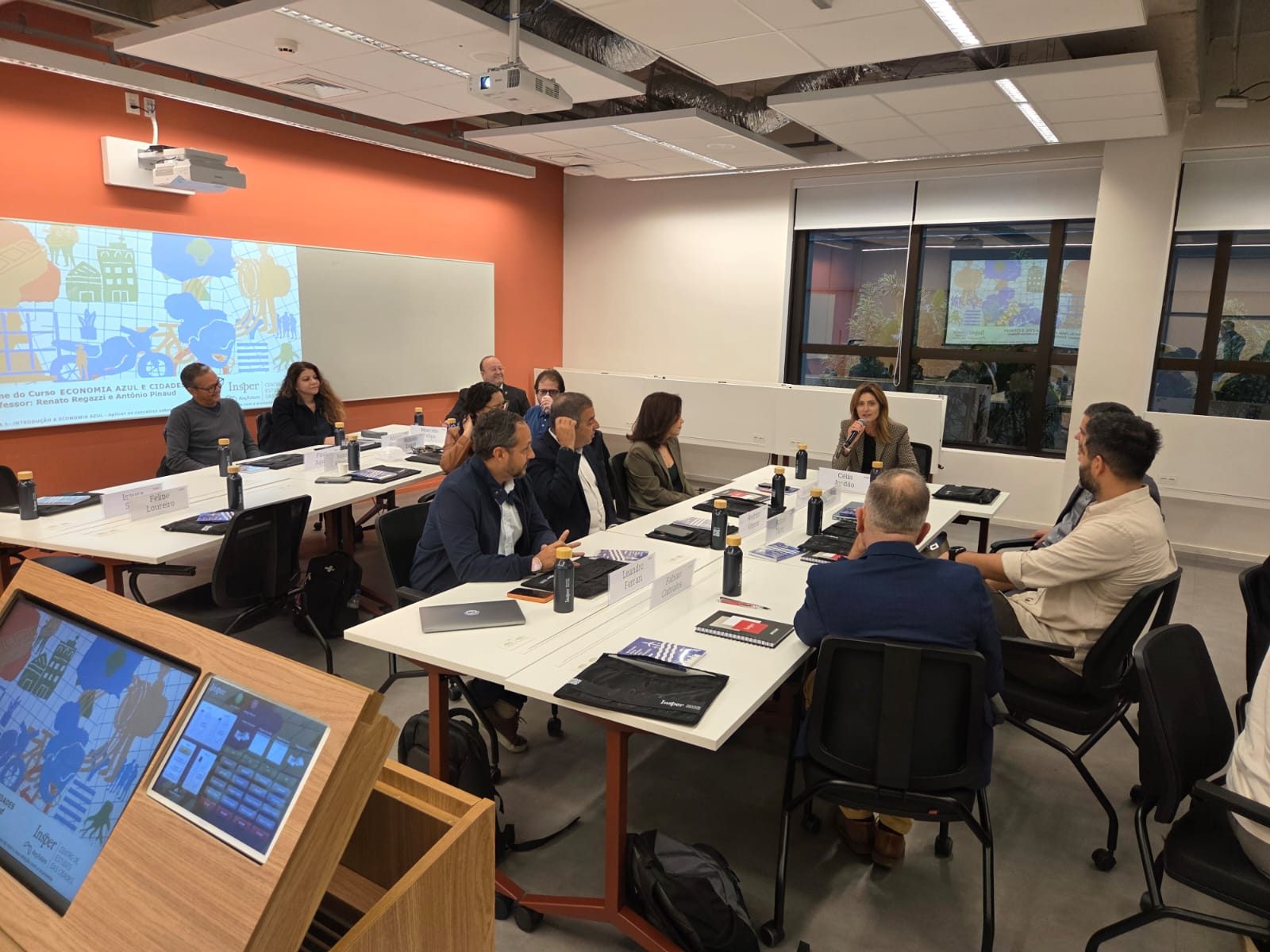
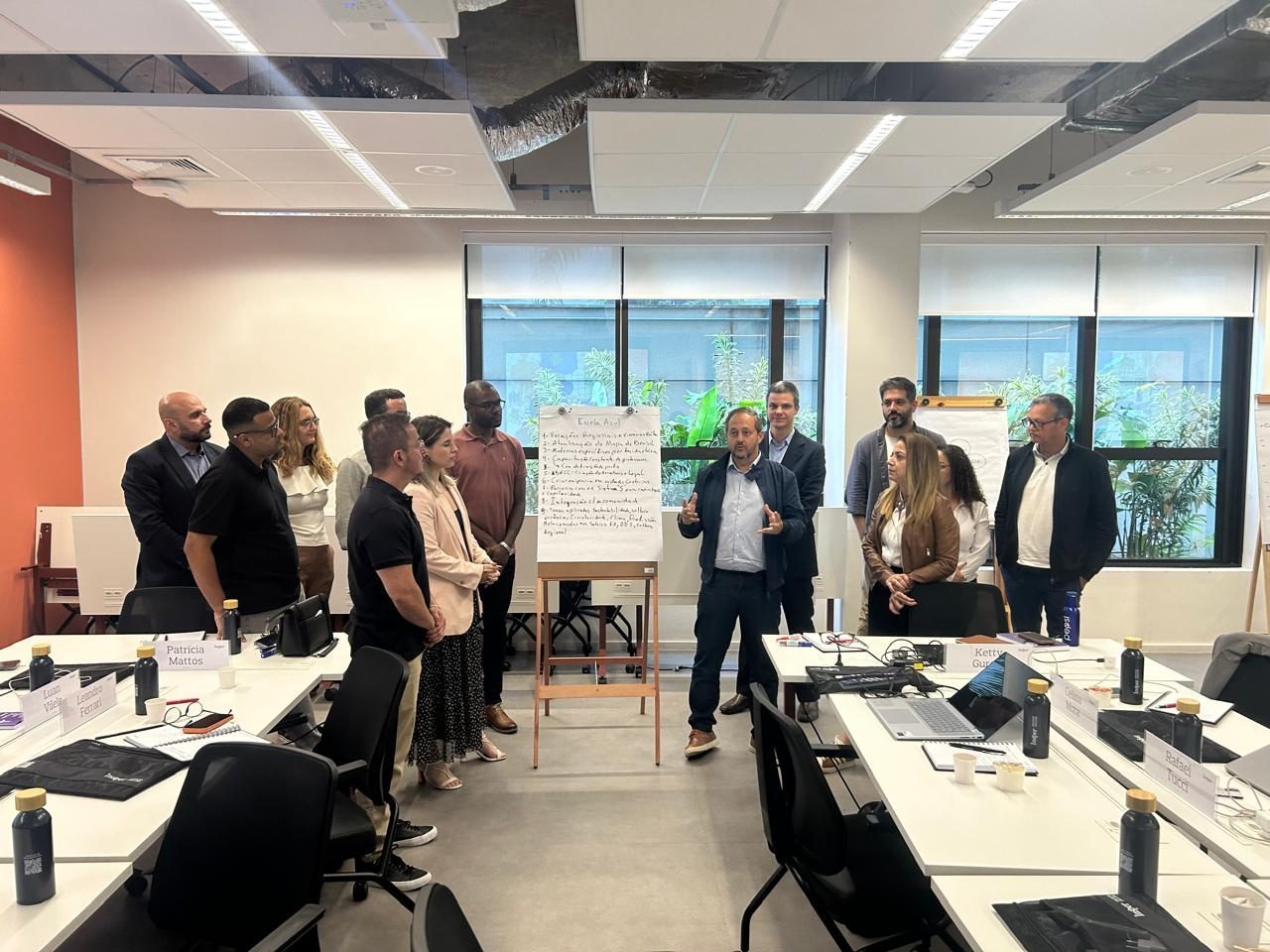
The cohort covers the whole chain, from government to industry. It brings together municipal public managers, port sector executives, officers of the Brazilian Navy, Sebrae in Santa Catarina and Amapá, Abeemar, the Brazilian Association of Sea Economy Companies, and ACATMAR, the Brazilian Nautical Association, represented by its president, Leandro "Mané" Ferrari, who also heads Mundo Mar Consulting. Institutes, non-governmental organisations and legislators complete the group, among them state deputy Célia Jordão, of Rio de Janeiro.
- 26 participants from public and private backgrounds
- 5 states: São Paulo, Santa Catarina, Rio de Janeiro, Amapá and Rio Grande do Sul
- 24 hours of class time, across three days of in-person teaching
- 4th cohort since the course was created
- US$ 3 trillion is the turnover the OECD projects for blue clusters by 2030, a figure Insper uses to frame the subject in the course presentation
From concept to certification
The syllabus starts at the concept and ends at a management tool. The group works through the relationship between the sea economy and the blue economy, the seven ocean literacy perspectives defined by Unesco, the sectoral convergence diagram and an eleven-step route for building a local development project. Then come blue entrepreneurship, bluetech applied to maritime territories and a comparison between the Brazilian and Portuguese models of sustainable sea economy.
The final stretch speaks directly to anyone running a city: building a strategic plan to roll out the blue economy in a given place, the Blue Economy and Cities Index, used to measure and integrate actions across the territory, and the process of implementing and certifying public policy for coastal cities, which leads to the Blue Seal Coastal Cities Certification.
The method is student-centred. Anyone with hands-on experience in the territory is asked to present it to the group, and much of the content takes shape in that exchange.
Two professors from development finance and competitiveness
Antônio Pinaud is a specialist in strategic management from FGV/RJ, with training in executive leadership at Harvard and executive governance at IBGC. He works on sustainable local and regional development plans and co-wrote four books in the field, among them Sea Economy, a Brazil Portugal sustainable development strategy. He chaired ABDE's governance, compliance and risk committee and served as social development secretary and chief executive of the Alagoas Development Agency.
Renato Dias Regazzi is a mechanical engineer from UFRJ with a master's in technology management from CEFET-RJ, a specialisation in production engineering from INT/UFRJ and courses in strategic management at INSEAD, strategy and innovation at Stanford and local productive cluster management through IDB/Promos, in Milan. His work centres on the competitiveness of micro, small and medium enterprises and on the sea economy. He advises the presidency of Sebrae/RJ and sits on the Micro and Small Business Council of the Rio de Janeiro Commercial Association.
Macaé's master plan and the Blue Seal
The handover by the Macaé delegation is a direct consequence of the certification process. During the Blue Seal Coastal Cities work, Pinaud found that a coastal city's master plan cannot be designed apart from the sea economy, and flagged the revision as a strategic need. One of the seal's structuring requirements is a blue economy governance system, which forces the municipality to review and realign its territorial planning instruments.
Macaé was the first Brazilian city to join the certification, created by Facerj in partnership with Abeemar. Mayor Welberth Rezende announced the city's accession on 27 July this year, during the 4th Sea Economy Fair. There are twenty requirements to prove, and the municipality's next step is the report setting out what has been met and what is still missing.
The city is built on oil and offshore operations, and is using the blue agenda to broaden its economic base into coastal and nautical tourism, fishing, maritime services, research and innovation.
Marine Spatial Planning makes the agenda
The group also received an update on the strategic work of Marine Spatial Planning (MSP) in Brazil, presented by one of the students, Rodrigo de Campos Carvalho, a specialist in MSP, coastal management and continental shelf surveying.
MSP organises uses of the sea, from fishing to power generation, from shipping to protected areas, and defines who may do what and where. It was established by Decree 12,491 of 5 June 2025 and covers the territorial sea, the exclusive economic zone and the continental shelf, the area the Navy calls the Blue Amazon. Governance sits with the Interministerial Commission for Sea Resources, jointly coordinated by the Brazilian Navy and the Ministry of the Environment, with delivery handled by the CE-PEM executive committee. Brazil has committed to rolling the planning out across its entire marine territory by 2030.
For investors, MSP is what gives a project legal certainty. Without a defined use of space, a marina, a wind farm, a farming area and a shipping lane all compete for the same stretch of sea with no rule of priority.
The nautical industry in the blue city's accounts
The nautical supply chain is one of the levers a coastal municipality can pull once it organises its own governance of the sea, and that is where ACATMAR's presence on the course comes in. The association wants to take the blue city model into city halls and qualify itself to advise states and municipalities that join the agenda. Santa Catarina, where the association is based, accounts for around 70% of Brazil's leisure boat production.
Leandro "Mané" Ferrari, president of ACATMAR and director of Mundo Mar Consulting:
"It is a moment of learning across several fronts of the blue economy, but it is also a moment of exchange between the people in this room. As a specialist in the sea economy, in the nautical sector and in sustainable projects such as cleaning the seas, I am here to add something to the participants."
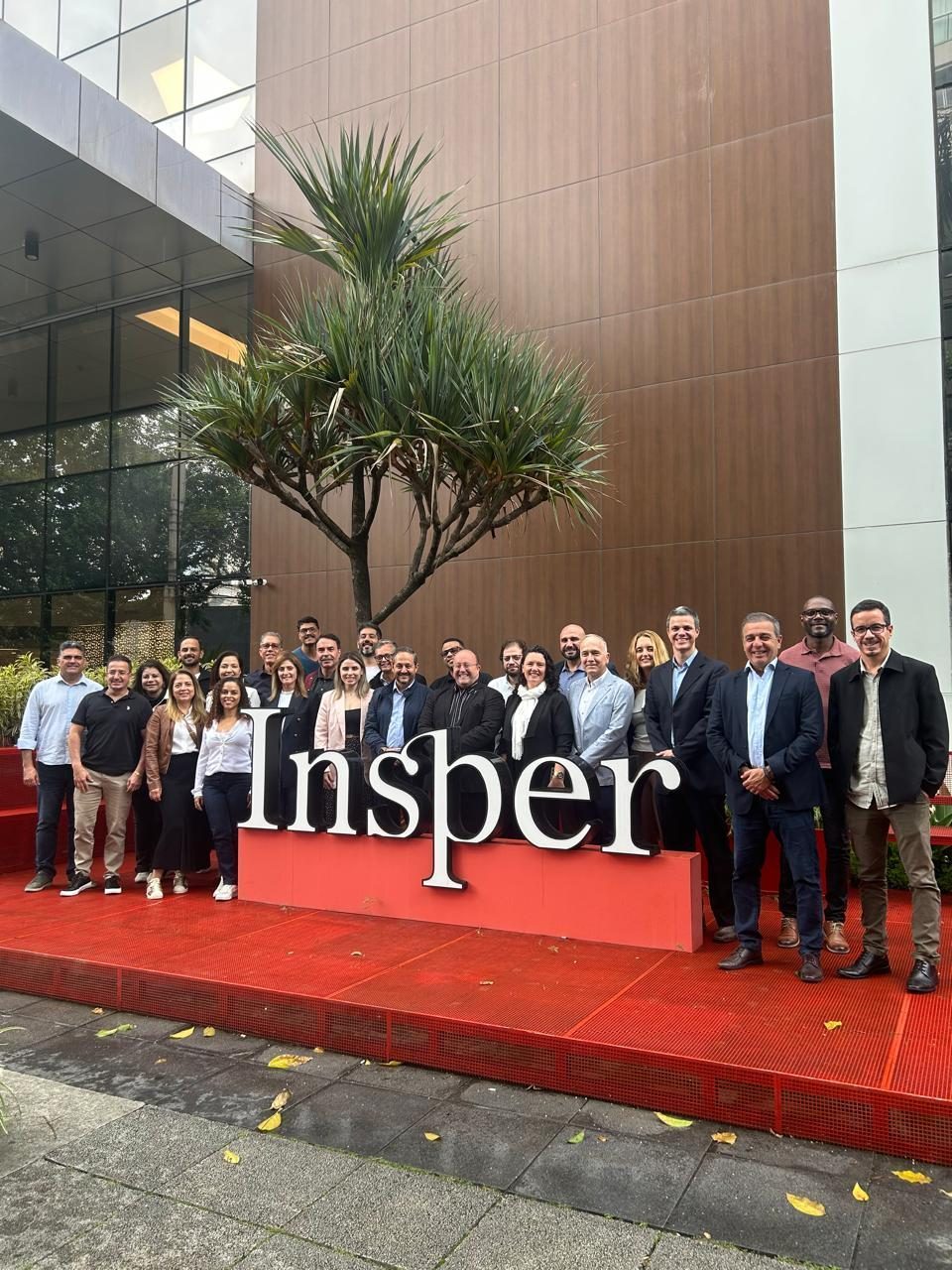
The course closes on Saturday. Macaé leaves with its master plan already handed over. The other cities in the room leave with the certification route and the index that will measure how far each one gets.
By: Redação Mundo Mar
Photo: Foto: Divulgação/Insper Cidades