 By Mané Ferrari
President of ACATMAR and Ocean Economy specialist
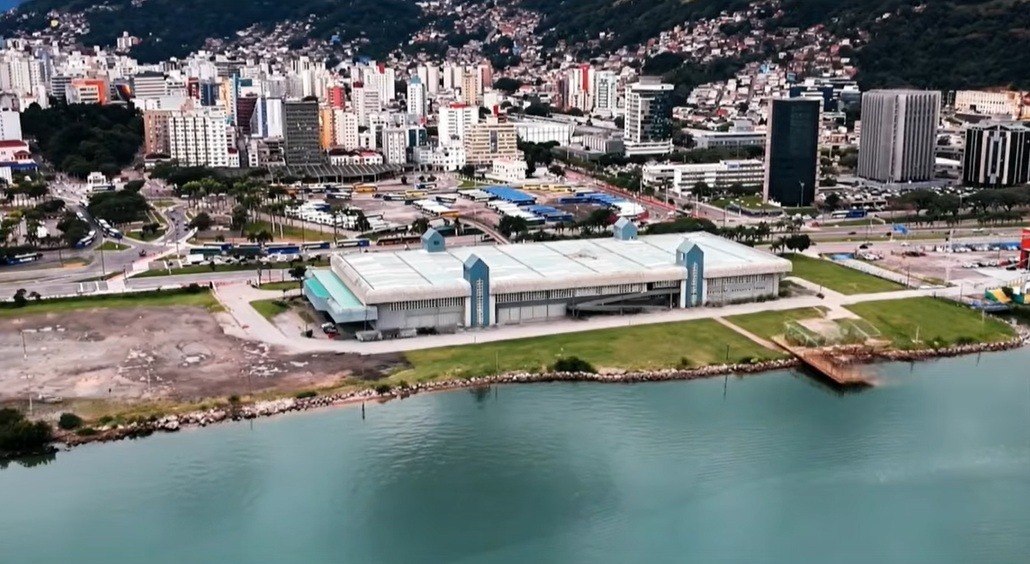
I have always seen a similarity between CentroSul, in Florianópolis, and the area of the Fiera di Genova, in Italy. Not in size, of course, but in something I consider far more important: the location and the relationship that is possible with the sea.
Genoa is a city that understood that being by the sea is not enough. You have to make the sea part of life, of the economy and of urban development.
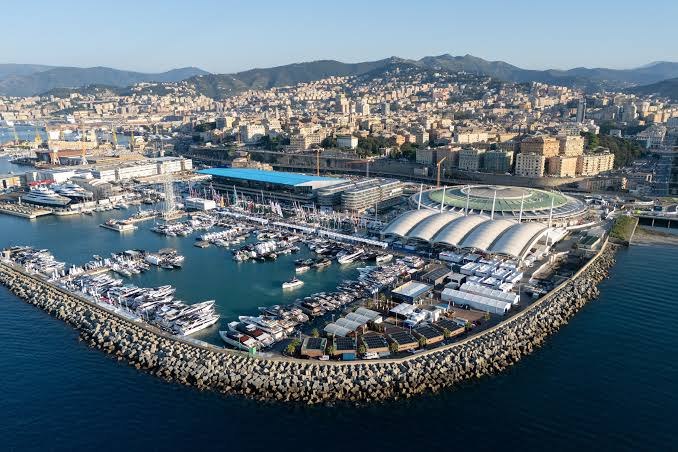
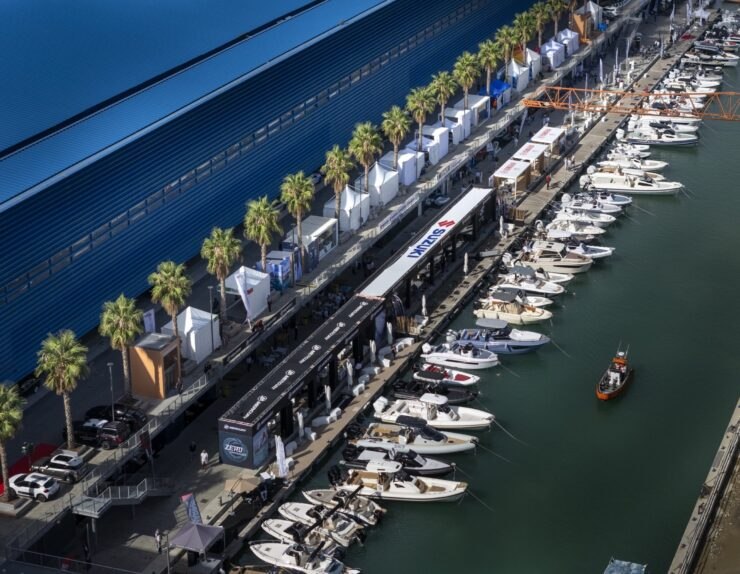
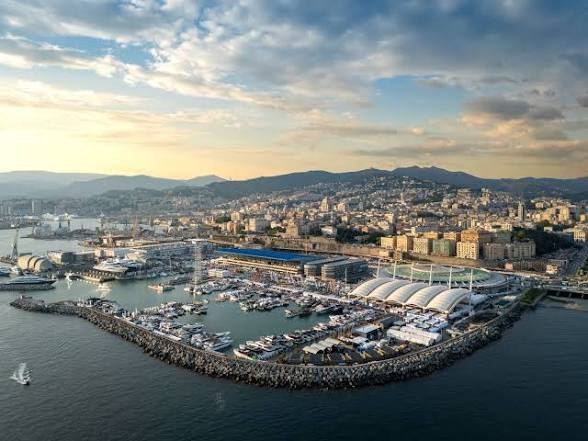
For more than six decades, the Fiera di Genova area has hosted the Salone Nautico, one of the most important nautical events in the world. There stands the emblematic Padiglione Blu, designed by architect Jean Nouvel, along with marinas, breakwaters and structures for exhibitions and events, in an area completely connected to nautical activity.
But Genoa decided to go much further.
In recent years, a profound transformation has begun to redesign that whole area through the Waterfront di Levante, a project conceived by the Renzo Piano Building Workshop. The proposal brought the city even closer to the Mediterranean and did something that, to me, is extraordinary: instead of simply building facing the sea, it brought the sea into the city.
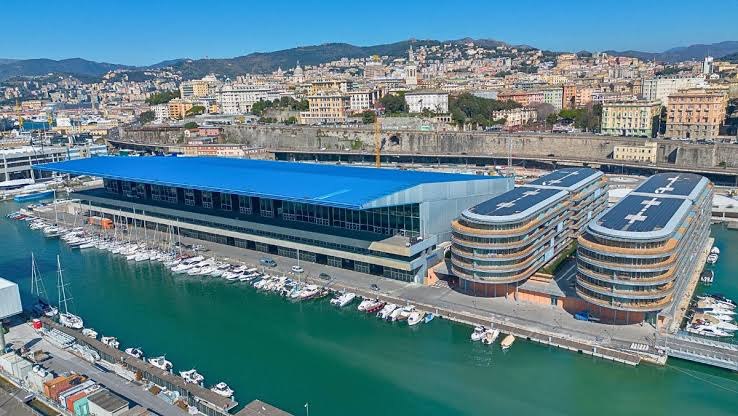
New navigable canals were opened, new berthing areas appeared and the water began to wrap around buildings. The Padiglione Blu gained an even more direct relationship with the sea. Around that complex, a new urban centrality began to take shape, integrating events, boating, sport, retail, services, hospitality, green areas, housing and public spaces.
It is practically a new city being born around the sea.
And every time I am in Genoa and watch this transformation, I inevitably think of Florianópolis.
And why not here?
CentroSul occupies one of the most privileged locations in our capital. It stands before the Baía Sul, next to the heart of the city, close to the bridges and set in a landscape that perhaps no architecture could ever reproduce.
We have the main element right in front of us: the sea.
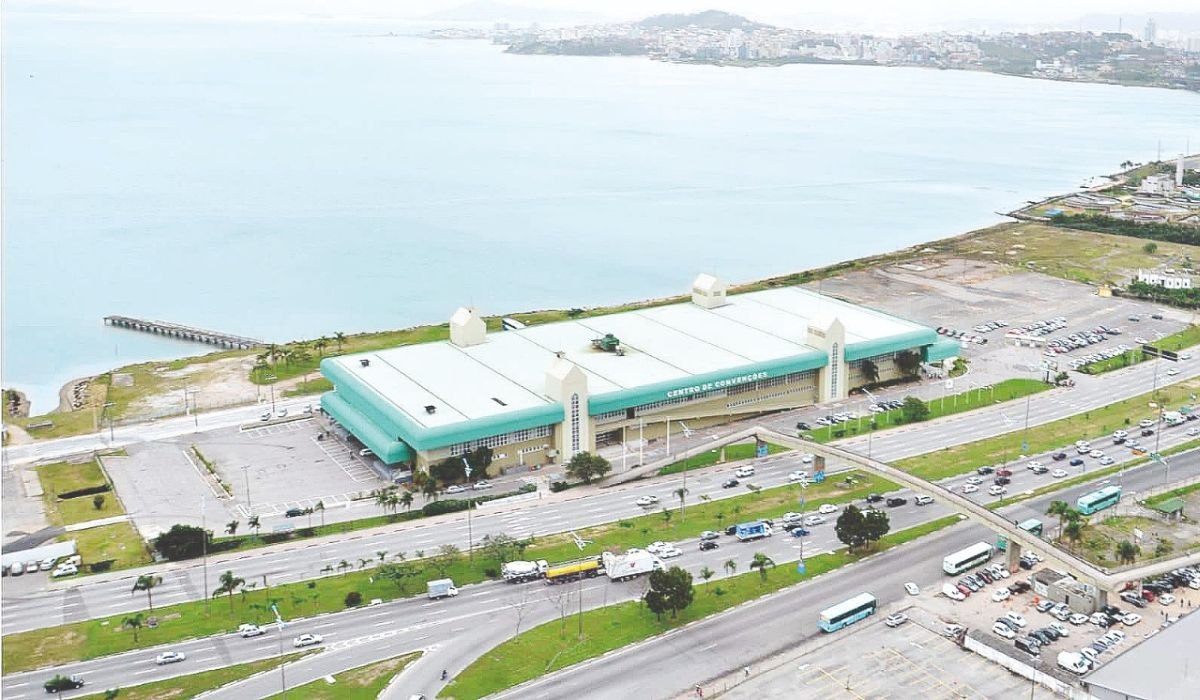
Now, with a new phase presenting itself for CentroSul, perhaps it is also time to widen the discussion. Not to think only about modernising a building or its capacity to host congresses, fairs and major events, but about the potential to transform that entire territory.
Could we dream of a CentroSul truly integrated with the sea?
A marina connected to the complex? Nautical events using land and water areas at the same time? Maritime transport reaching the events centre? Gastronomy, retail and gathering spaces facing the Baía Sul? A place that stays alive 365 days a year, even when there is no fair or congress taking place?
I am not saying that Florianópolis should copy Genoa. Each city has its own environmental, urban, economic and social reality, and any intervention must respect it.
But we can learn from Genoa.
The Waterfront di Levante shows how an events venue can stop being an isolated structure and take part in a much larger urban transformation, reconnecting a coastal city to its maritime vocation.
Florianópolis is an island. Tourism is among the great forces of our economy. We have a consolidated nautical chain, an Ocean Economy with enormous potential and one of the most extraordinary landscapes in Brazil.
So why think small?
The new stage of CentroSul may open an opportunity to discuss something much bigger than the future of an events centre.
It may be the chance to ask what relationship Florianópolis wants to have with the sea in the coming decades.
First, however, it is fair to acknowledge those who helped build the history that brought us here. The current CentroSul concessionaire was, over nearly three decades, a partner of the tourism trade and played an important role in strengthening the capital's events tourism. Through that space passed congresses, fairs, meetings and events that moved hotels, restaurants, transport, retail, services and thousands of professionals.
That legacy deserves our recognition and gratitude.
Now a new cycle begins.
May the new concessionaire find in the tourism trade, in the institutions and in the city partners to think big. And may we use this moment not only to renew CentroSul, but to discuss how this space can help Florianópolis rediscover a trait that lies at the very origin of the city: living facing the sea, with the sea and from the sea.
Genoa dared to do it.
Could it be Florianópolis' turn to dare as well?
Mané Ferrari
President of ACATMAR, the Brazilian Nautical Association
Tourism coordinator of Floripa Sustentável and president of FORTUR, the Greater Florianópolis Tourism Forum
By: Mané Ferrari
Photo: Divulgação: Prefeitura de Florianópolis